
Goth style never really went away. It shapeshifted, from the backcombed silhouettes of late-70s post-punk London to TikTok dark aesthetics racking up billions of views in 2024 and 2025. What began in the basements of Leeds, Berlin and Northampton is now shaping runways, festival lineups and street style in equal measure.
This is a guide for people who actually want to understand it. Not a glossary, not a TikTok primer. A proper map of where the subculture came from, how the wardrobe evolved, what the main aesthetic branches are today, and where Psylo fits inside that lineage.
What is Goth?
The word goes back to the Goths themselves, a Germanic people who played a decisive role in the fall of the Western Roman Empire. They dismantled much of what the ancient world had built and, centuries later, lent their name to the architectural language that rose in its place. Gothic architecture, with its soaring spires and pointed arches, defined the medieval imagination until the Renaissance pushed it aside. The name stuck anyway, attached now to anything that carried that medieval weight.
The contemporary subculture grew from a collision of dark romanticism, music, literature and a deep refusal of the mainstream. It is an explosion of individualism, with roots reaching back to twelfth-century Gothic style and igniting again in the post-punk basements of the late 70s and 80s. From there it spread into street style, fashion, film and music, where its influence is still impossible to overstate.
The Origins: How Goth Became Goth

Bela Lugosi's Dead, Bauhaus, 1979.
Goth as a recognisable subculture took shape between 1979 and 1983, when British post-punk fractured into something darker, more theatrical and more interior. Bauhaus released Bela Lugosi's Dead in 1979. The Batcave opened in Soho in 1982 and gave the scene a physical address. Siouxsie Sioux, Robert Smith, Peter Murphy and Andrew Eldritch became the visual templates that the wardrobe would orbit around for the next four decades.
What made the aesthetic possible was a refusal to choose between sources. Victorian mourning dress sat next to German Expressionist cinema. Pre-Raphaelite painting met the hard edge of punk and the theatrics of glam rock. Fetish imagery, monastic robes, romantic literature: all of it fed in, none of it dominated. The collision is the point. Goth has never been one influence imposing itself on the others. It has always been a synthesis.
The word itself was first used as a description of the music, applied by an NME journalist to Joy Division in 1979, before it migrated to describe the people, the look and the life. By the mid-80s it had stopped being a music label and started being a culture.
What Holds the Subculture Together
Goth has no manifesto and no political programme, which has always confused people who expected one. Unlike punk, it never positioned itself as activism. Unlike hippie culture, it didn't propose an alternative society. What it offered instead was a permission slip: to look inward, to take the uncomfortable parts of human experience seriously, to make beauty out of darkness without apologising for either.
The result is a culture built around individualism, tolerance and a deep appetite for theatre. The dramatic make-up, the elaborate wardrobes, the literary references aren't costume. They're the language people use to say something about themselves that nothing else in mainstream culture lets them say. This is why goth has lasted. Trends need a constant supply of newness to survive. Goth doesn't.
How the Wardrobe Evolved

Siouxsie Sioux, the visual template of 80s goth fashion.
The 80s built the visual grammar that everything since has either honoured, mutated or rejected. Velvet, lace, fishnets, crucifixes, mourning silhouettes and backcombed hair found their definitive expression in the wardrobes of Siouxsie Sioux and the Banshees' inner circle. Her eyeliner became a recognisable shorthand for the entire subculture. The wardrobe was theatrical because the music was, and the two stayed coupled.

Within Temptation, carrying the romantic goth lineage into the 90s.
The 90s pulled the scene in two directions at once. The romantic, lace-heavy lineage continued through bands like Within Temptation and the second wave of darkwave. At the same time, industrial music and the rise of clubs like Slimelight in London pulled the look toward leather, vinyl, militaria and a heavier electronic palette. Cyber goth was being assembled in this period before it crystallised in the 2000s, when goth became more visible in mainstream culture and more divided internally. The internet accelerated the fragmentation: UV-reactive dreads and platform boots arrived in force, nu-metal pulled some of the visual cues into stadium-scale audiences, and models like Erin O'Connor and Daphne Guinness carried elements of the aesthetic into high fashion editorials.

Chemical Sweet Kid performing at Wave Gotik Treffen, Leipzig, wearing Psylo's Moli Vest.
Then came the quiet years. The 2010s saw goth go underground again, but productively. Tumblr became the unlikely archive where new aesthetic branches took shape away from the mainstream, while traditional goth scenes kept their festivals and communities intact. Wave Gotik Treffen in Leipzig and Whitby Goth Weekend in Yorkshire continued to draw their crowds. The mainstream wasn't paying attention. The scene didn't need it to.

Wednesday, Netflix, 2022. The cultural turning point that introduced dark aesthetics to a new generation.
That changed in 2022, when Netflix released Wednesday and a generation of Gen Z teenagers discovered dark aesthetics through it. Most of them stayed. By 2023 and 2024, TikTok had become a global accelerant for every goth-adjacent aesthetic at once. Older subculture members watched the resurgence with a mix of recognition and exhaustion. Younger members built something new from the same DNA. The runways followed, as they always do. Rick Owens never left, but darker silhouettes also moved through Comme des Garçons, Ann Demeulemeester, Yohji Yamamoto and a wave of independent designers working deliberately outside the mainstream. Wave Gotik Treffen recorded its highest attendance in years across 2024 and 2025.
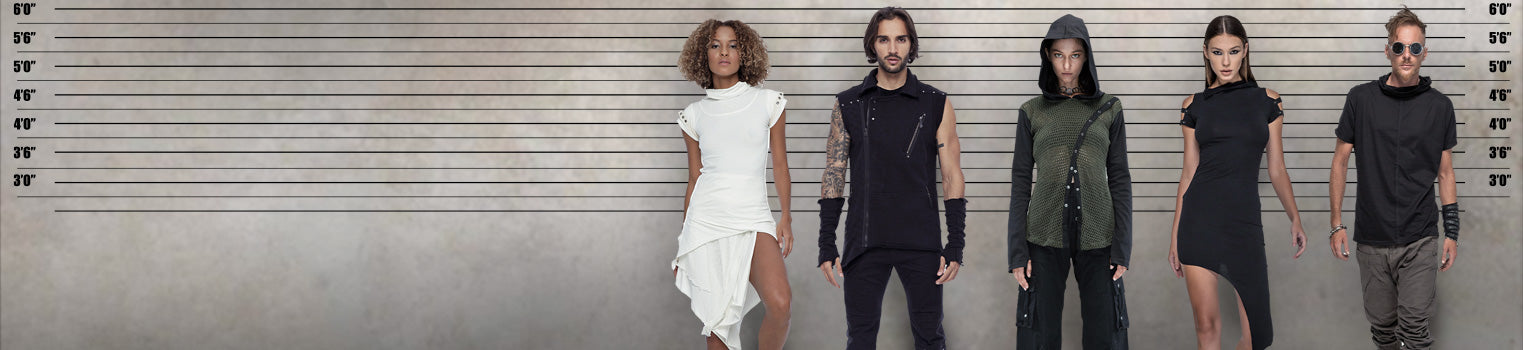
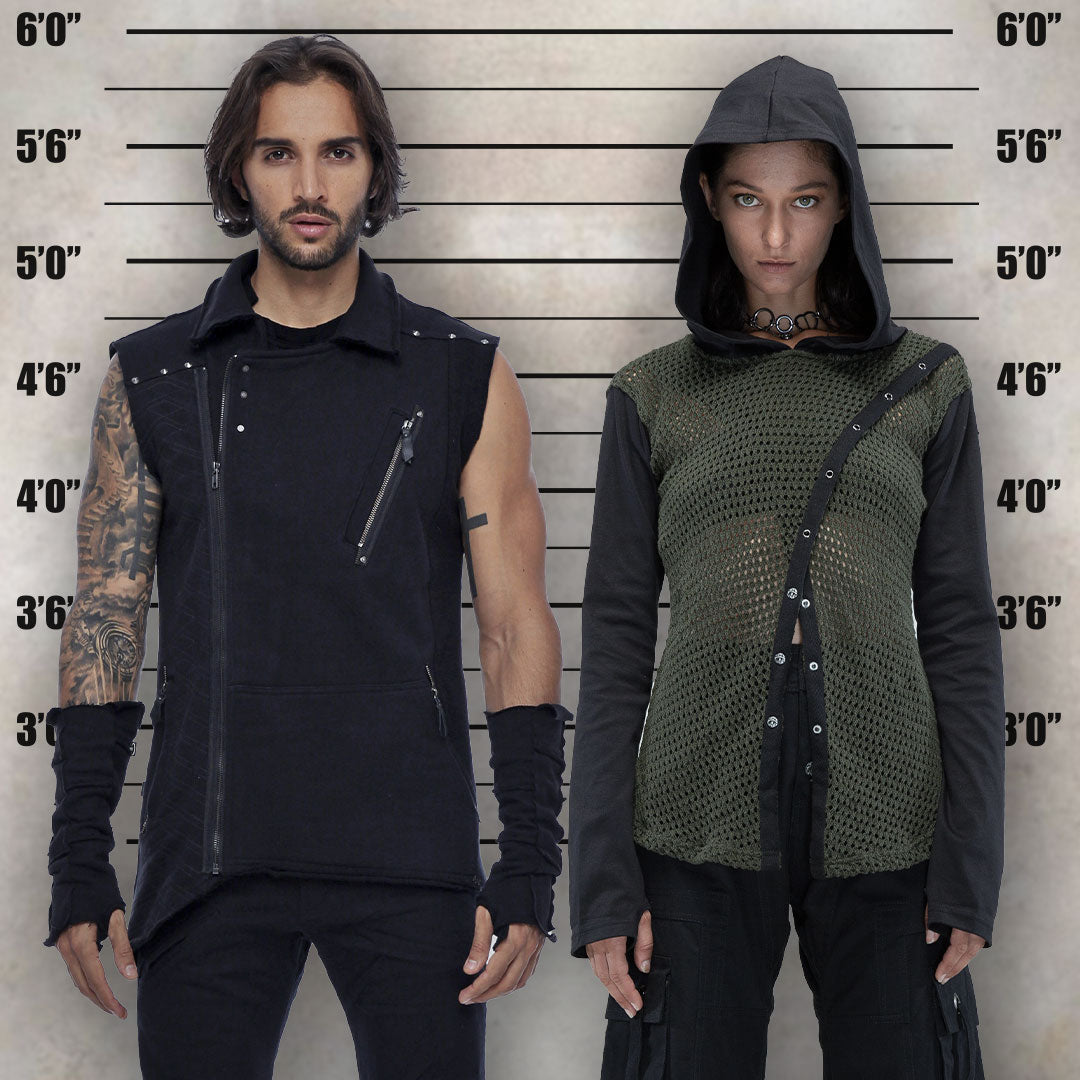
In 2026 the most interesting development is the dissolving boundary between goth and streetwear. Oversized silhouettes, dark technical fabrics, distressed layering and handmade construction are meeting traditional dark aesthetics on equal terms. This is exactly the intersection Psylo has been operating in since the beginning.
The Main Branches of Goth Today
The subculture splits along aesthetic lines, not hierarchical ones, and the branches overlap, borrow from each other and are usually worn in combination rather than in isolation. But they fall, broadly, into three families.

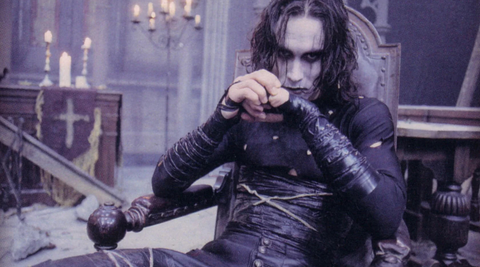
Traditional goth: the 80s grammar still alive today.
The first family stays close to the original template. Traditional goth keeps the 80s grammar alive: fishnets, backcombed hair, heavy boots, dramatic eye make-up, music-led and unapologetically theatrical. Romantic goth leans into the Victorian and Pre-Raphaelite end of the spectrum: corsets, flowing skirts, dark florals, more lace than leather, more red wine than oxblood. Both are anchored in the literary and musical lineage that built the subculture, and both reward commitment over restraint.

Cyber goth: the electronic, industrial face of the subculture.
The second family is where goth met electricity. Cyber goth emerged from industrial music and rave culture, fusing neon, UV-reactive elements, platform boots, goggles and technical fabrics into the most visually extreme corner of the scene. It overlaps with steampunk and post-industrial aesthetics and remains the branch most associated with club culture and high-energy performance. Goth's electronic side is also where some of its most uncompromising looks are still being made today.

Nu-goth and witchy aesthetic: minimalist, occult, DIY.
The third family is the quieter, contemporary expansion. Nu-goth and witchy aesthetic stripped the theatre back to minimalist black layering, occult symbolism and a strong DIY ethic, which is the territory our Psylo Punk styles sit closest to. Dark academia took shape through Tumblr in the late 2010s and exploded on TikTok during the pandemic, bringing tweed, turtlenecks, antique jewellery and autumn palettes into a gothic sensibility that's visually muted but conceptually faithful. Around the edges sit the more hybrid branches: pastel goth inverting the palette into lavender and powder pink under Kawaii influence, hippie goth and tribal goth bringing pagan imagery, layered draping and movement-led silhouettes into the dark aesthetic (the crossover point with our Ethno Psylo world), and casual goth acting as the everyday entry point for those drawn to the wardrobe without the full theatrical commitment. That last edge, the crossover between streetwear and alternative fashion, is exactly where Psylo has been operating from the start.
What's Driving Dark Fashion in 2026
The mainstream gothic boom has produced a wave of mass-produced approximations the scene is collectively rejecting, and the result is that handmade construction has become the new marker of authenticity. Limited runs, visible craft, things made by people who care: this is no longer a nice-to-have inside the community. It's the line that separates the people dressing the aesthetic from the people living it.
Silhouette is the other big shift. The skinny cut that defined the 2000s and early 2010s has lost ground completely, replaced by oversized hoodies, draped jackets, asymmetric layering and architectural shapes that now dominate festival and street looks alike. At the same time the old opposition between dark aesthetics and natural fabric has dissolved: bamboo, organic cotton and hemp are appearing alongside the leather and velvet that defined the traditional wardrobe, which is the principle our bamboo collection is built on. None of this is more visible than at Wave Gotik Treffen, which continues to be the benchmark for serious dark fashion. Multi-day, multi-layered, weatherproof, built to last. Not a costume, a statement. Read our WGT story for the full context on how deep that connection runs for us.
Where Psylo Fits

We've been making dark alternative styles in Bali and selling them out of Camden Town and online for over a decade. We didn't get into this because goth was trending. We got into it because it was already ours. We grew up inside this scene, sharing experiences and drawing inspiration from the subculture and from all the people we've met along the way.
If you want to find the point where our world meets yours, the Ethno Psylo and Psylo Punk collections are where to start. Or come find us at the Camden Town boutique.
Frequently Asked
What should I wear to my first goth event?
Layer dark pieces with strong footwear and one intentional accessory. Don't try to cover every aesthetic you've seen online. Pick one branch and commit to it. The community reads commitment over completeness, and a coherent traditional look will always land better than a confused fusion of five.
How is goth different from emo?
Emo emerged from American post-hardcore in the late 80s and 90s, with a different musical lineage running through Sunny Day Real Estate and later My Chemical Romance, and a different visual grammar of band tees, skinny jeans and side-fringe hair. Goth is older, broader, rooted in British post-punk, and more theatrical in its wardrobe and its references.
Is goth fashion expensive?
It depends entirely on where you buy. Mainstream interpretations of dark aesthetics from fast fashion brands are cheap and short-lived, which is part of why the community has turned against them. Authentic alternative brands with handmade construction cost more upfront but last for years and hold their value inside the scene.
Can you mix goth with other aesthetics?
Yes, and most experienced goths do. Hippie goth, dark academia, soft goth and casual goth are all hybrid forms that prove the point. The subculture has never required purity, only intention.
What festivals are essential for goth fashion?
Wave Gotik Treffen in Leipzig is the largest and most important. Whitby Goth Weekend in the UK, M'era Luna in Germany and Amphi Festival in Cologne are the other key dates on the calendar, and each has its own character: WGT is the most diverse aesthetically, Whitby the most traditional, M'era Luna the most music-led.